A budget smart plug can make a simple appliance easier to control, but it is still an electrical product. In an Indian home, socket type, appliance load, wiring quality, power cuts, and app reliability matter more than a discount or voice-assistant logo.
Quick answer
Choose a smart plug only after checking the appliance load, socket fit, plug rating, Wi-Fi requirement, app reliability, warranty, and privacy settings. Do not use a normal budget smart plug for high-load appliances unless the product and wiring are clearly suitable.
Start with the appliance, not the gadget
Before comparing products, decide what you want to control. A smart plug that is fine for a lamp may be unsafe or unsuitable for a heater, geyser, microwave, washing machine, refrigerator, induction cooktop, or air conditioner.
| Use case | Risk level | What to check |
|---|---|---|
| Bedside lamp or decorative lights | Lower | Socket fit, app schedule, basic rating |
| Wi-Fi router restart | Lower to medium | Reconnection after power cuts and schedule reliability |
| Charger or small speaker | Lower | Load rating and whether scheduling is useful |
| Geyser, heater, iron, induction, microwave, AC | High | Dedicated heavy-load rating, wiring, plug type, and electrician guidance |
Check load rating carefully
Look for the amp rating and maximum wattage on the smart plug listing, box, or manual. Then compare it with the appliance label. If the listing hides electrical details and only advertises app control, skip it.
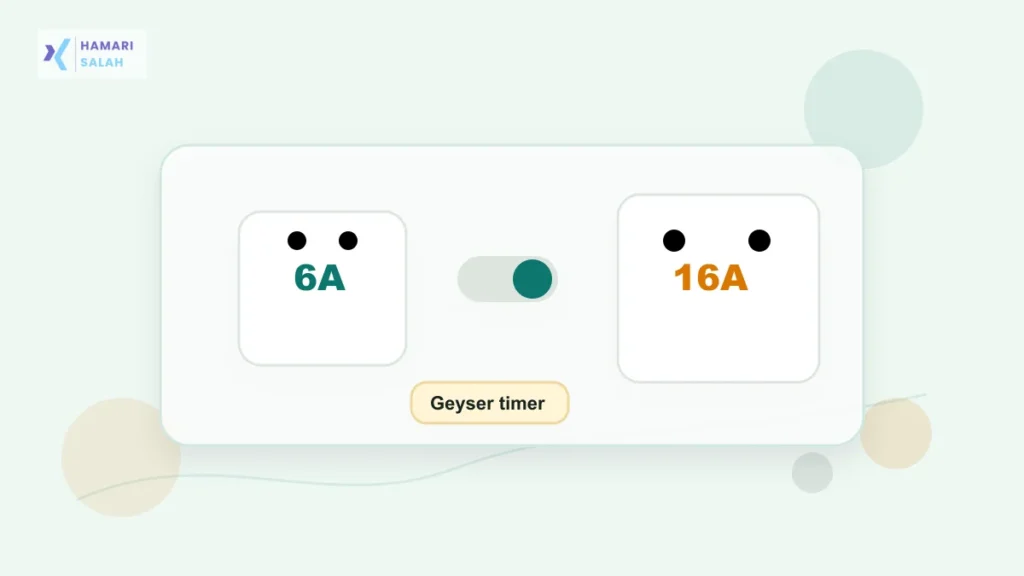
Many Indian switchboards have both small and large sockets. A plug that physically fits is not automatically safe for every appliance. High-draw appliances need the right socket, right rating, and safe wiring.
High-load warning
Be extra careful with geysers, room heaters, irons, induction cooktops, microwaves, refrigerators, washing machines, and ACs. Do not schedule heat-producing or high-load appliances to run unattended unless the product, wiring, and manufacturer guidance clearly allow it.
Check Indian socket fit
Indian switchboards can be tight. A bulky smart plug may block a nearby switch, sit loosely, or make the appliance plug bend awkwardly. Loose fit, heating, sparking, or a burning smell means you should stop using it and get the point checked.
- Check whether the smart plug body blocks nearby switches.
- Confirm the appliance plug fits firmly.
- Avoid cheap extension boards for heavy loads.
- Keep the plug away from wet kitchen or bathroom areas.
Check Wi-Fi and app support
Many smart plugs need 2.4 GHz Wi-Fi for setup. Some apps also require account creation, location permissions, or cloud access. Check recent app reviews and whether the device reconnects properly after power cuts.
- Android and iPhone app availability.
- 2.4 GHz or dual-band router compatibility.
- Firmware update behavior.
- Voice assistant support only if you actually need it.
- Warranty and service support in India.
Use smart plugs for convenience, not miracle savings
A smart plug can help with schedules, timers, remote switching, or energy visibility. It does not automatically reduce your electricity bill. The biggest electricity waste in many homes may come from AC use, geyser habits, old refrigerators, or empty-room fans, not a lamp or charger.
For broader electricity habits, read how to reduce monthly electricity waste at home.
Privacy and account checklist
A smart plug app may collect account, device, network, and usage information. Use a strong password, update firmware when available, and remove the device from your account before selling it or giving it away.
If your phone already has storage issues, read how to clean phone storage without deleting WhatsApp memories before installing more smart-home apps.
Final buying checklist
- The appliance load is within the plug’s rated limit.
- The socket and plug type match properly.
- The plug does not block nearby switches.
- The app works on your phone and Wi-Fi setup.
- The product has clear warranty and return terms.
- Reviews do not repeatedly mention heating, loose fit, or connection drops.
- You understand the privacy and account requirements.
FAQ
Can I use a smart plug with a geyser?
Do not use a normal budget smart plug with a geyser unless the device, socket, and wiring are clearly rated for that load. Ask an electrician when unsure.
Do smart plugs save electricity?
They can help reduce waste if schedules or monitoring fix a real habit. They do not automatically cut the bill by themselves.