Following up with a manager can feel awkward, especially in Indian workplaces where hierarchy matters. The goal is not to sound impatient. The goal is to make the pending decision easy to understand and easy to approve.
The follow-up rule
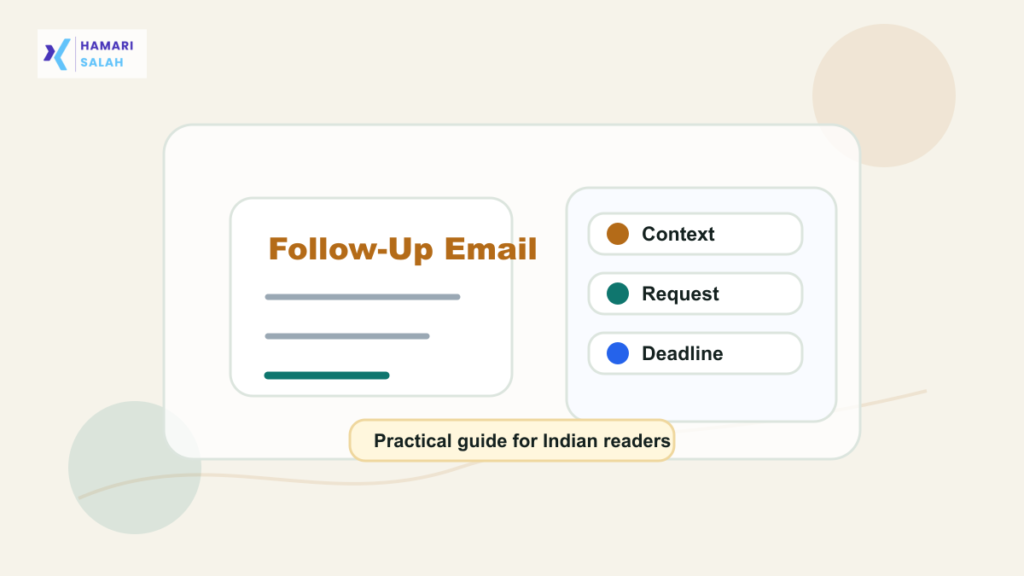
Your follow-up should reduce the manager’s effort. Do not force them to search old emails. Mention the original request, the pending action, and the date by which you need a response.
Template for leave approval
Subject: Follow-up on leave approval for [dates]

Hi [Manager name],

I wanted to follow up on my leave request for [dates]. I have shared the handover plan and can make any changes if required.

Could you please confirm the approval when convenient? This will help me finalize the coverage plan with the team.

Regards,
[Name]
Template for expense or reimbursement approval
Subject: Follow-up on reimbursement approval

Hi [Manager name],

I am following up on the reimbursement approval for [brief purpose]. The documents were submitted on [date] through [official system].

Please let me know if any clarification is needed from my side.

Regards,
[Name]
Template for project clearance
Subject: Approval needed to proceed with [project/task]

Hi [Manager name],

I am checking in on the pending approval for [specific decision]. Once approved, I can proceed with [next action].

If you prefer a different approach, I can revise the plan and share it again.

Regards,
[Name]
When to follow up
For normal approvals, waiting 24 to 48 working hours is reasonable. For urgent items like same-week leave, client deadline, payroll cutoff, or timesheet submission, mention the deadline clearly and politely.
When to switch channels
If an email is ignored and the deadline is close, send a short Teams or Slack reminder: “Hi, I have sent a follow-up email on [topic]. Could you please check when possible? The cutoff is [time/date].”
For related workplace communication, read how to prepare a weekly timesheet summary and how to write a manager-friendly end-of-day update.
FAQ
Can I say urgent in the subject line?
Use urgent only when there is a real deadline or business impact. Overusing urgent makes future messages weaker.
Should I copy senior leadership?
Usually no. Escalate only when the approval is business-critical and your team process supports escalation.